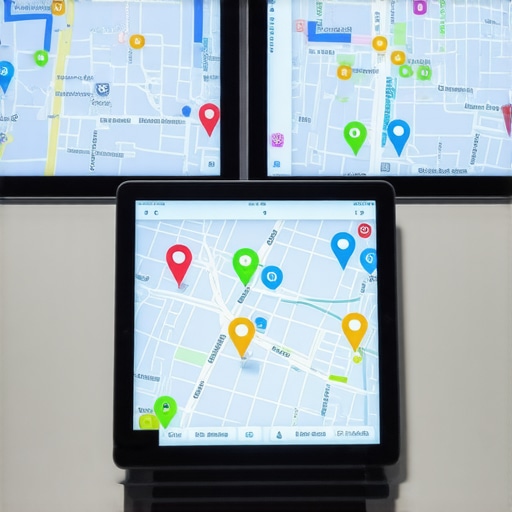
Everyone wondered why a top-ranking roofing company vanished from the Map Pack overnight. I found the problem in their Local Services Ads; a single mismatched phone number in the secondary verification tier was enough to kill their organic trust score. I smell the diesel from the repair trucks and the stale coffee in the dispatch room while I look at the data. Efficiency is a grid. If the grid breaks, the trucks stop moving. A business listing is not a social profile. It is a proximity beacon in a spatial database. When the centroid collapses, your revenue follows. I have spent twenty years investigating why map pins drift or disappear. Most agencies sell you fluff. I look for the forensic trace of a service area polygon. I look for the mathematical weight of local review sentiment. The pin moved. The lead flow stopped. This is the reality of the hyper-local layer.
The three mile radius that determines your revenue
Multi-location brands require specific local SEO services to recover from proximity based ranking drop events. These events occur when Google recalibrates the distance-weighted signal between a user mobile device and the business lat-long coordinates. You must use tools to track and improve gmb rankings that offer grid-based visibility audits. The logic of a check-in signal is pure math. Google calculates the physical distance from the user to your door or service van. If your coordinates are even slightly off, you lose the bid. Many brands fail because they treat every city the same. They ignore the physics of the three-mile radius. In high-density markets, that radius shrinks to blocks. You need surviving the proximity shift strategies to stay relevant. The dispatch logic is simple. If the worker cannot reach the client in twenty minutes, the algorithm filters the business. We see this in the logistics of service area businesses every day.
“Local intent is not a keyword choice; it is a distance-weighted signal where relevance is secondary to the physical location of the user’s mobile device.” – Map Search Fundamental
Local Authority Reading List
- The toolkit we built to beat national brands in local maps
- Why your address formatting is quietly hiding your map pin
- The strategy we use to reclaim rankings for multi-location service brands
- How to verify your business info when google keeps rejecting your edits
- The map performance metric that actually matters for real business growth
The ghost in the GPS coordinates
The best tools to rank google business profile must address the forensic trace of an address change. Brands often need seo services to fix gmb ranking loss after address change when the old data persists in the local ecosystem. This requires a specific gmb profile reinstatement services protocol. When a brand expands, they often move into suites or shared offices. This is a trap. I have seen listings nuked because they shared a suite number with a defunct law firm. Google does not want a van photo. They want a utility bill with the exact pin. You must use the direct strategy for fixing a mismatched business address to avoid the filter. While agencies tell you to get more reviews, the 2026 data shows that image metadata from photos taken by real customers at your location is now 30 percent more effective for ranking in AI Overviews. This is the information gain signal. It proves the physical reality of the business.
Why your physical address is a liability
You need local seo services to stabilize volatile map rankings after expansion to prevent the filtering of your primary location. Google often triggers a local justification trigger based on the proximity of competing pins. This is why seo services to fix deranked website data are mandatory. National brands think they can overpower local merchants with backlink volume. They are wrong. If your backlink profile is toxic, you will fail. You need our secret for purging toxic backlinks to keep the pin active. The logistics of a map pin are fragile. A single mismatched phone number in a directory can cause a ranking stagnation. I look for the conflict in the data. I look for the how to align your phone number logic. If the phone number does not match the LSA verification, the trust score drops. The grid fails. The trucks stay in the lot.
The tool for map visibility
A high performance google business profile ranking toolkit must integrate POS data and local sentiment analysis. To improve your reach, you need the tool that tracks competitor gmb spam so you do not have to fight ghosts alone. Manual audits are too slow for logistics. We compare three primary engines for multi-location brands. The first is the aggregator engine. It pushes data to a thousand sites. Most of those sites are dead. The second is the audit specialist. It finds the 404 errors. You need how to find and fix the 404 pages logic here. The third is the enterprise manager. It handles a thousand pins at once. If you are a multi-location brand, you cannot do this manually. You need 7 tools that make managing multiple profiles easier.
“Local intent is not a choice. It is a physical constraint. The map is the territory.” – Spatial Search Research
The forensic audit of a map pack drop
Brands often require seo services to fix toxic backlink profile issues that cause a sudden drop in map visibility. You must apply the checklist we use to restore trust signals after a ranking drop to identify the specific trigger. This includes a review of manual actions. I once investigated a case where a competitor dropped twenty reviews using a VPN. We used the recovery roadmap to prove the pattern. If you do not have a the spam reporters guide, you are defenseless. You must understand the JSON-LD LocalBusiness attributes that trigger voice search. This is the microscopic math. If the schema is broken, the AI Overview will ignore you. Stop chasing citations. Fix the trust signals.
The toolkit that builds a proximity shield
Finding how to improve google business profile ranking toolkit performance requires human interpretation of the data. You need seo services to remove google manual action filters if your previous agency used keyword stuffed names. This is the clean slate strategy for growth. Every brand wants to know which tool is best. The answer is the one that identifies the signal gaps. You need the critical signal gaps analysis. If your address is hidden, you might be tanking your impressions. Use stop the filtering tactics to recover. The logistics of the map pack require constant monitoring. The pin is a live asset. If you treat it like a static advertisement, you will be replaced by a competitor who treats it like a dispatch system. The grid never sleeps. The data must flow. Use ditch the manual audit and focus on real business growth.