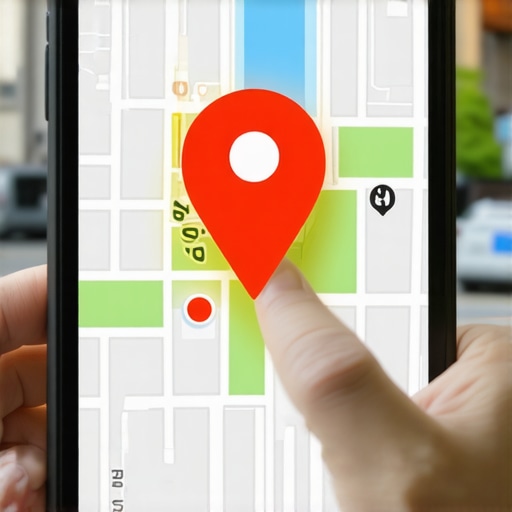
A Guide to Fixing Map Pin Placement Errors That Confuse Your Customers
The scent of stale coffee and burnt diesel lingers in the dispatch room as I stare at another map pin that has drifted into the middle of an intersection. For a logistics manager, a map pin is not just a digital icon; it is the physical destination of a fleet. When that pin drifts, fuel is wasted, customers grow irate, and the revenue stream stalls. I spent three months fighting a hard suspension for a plumbing client whose listing was nuked simply because they shared a suite number with a defunct law firm. Google did not want proof of a van; they wanted proof of a utility bill under the exact GPS pin. This is the reality of the hyper-local layer. It is a brutal game of spatial accuracy where a single digit error in a longitude coordinate can bankrupt a service company.
The reinstatement war for GPS precision
Fixing map pin errors requires a forensic approach to your Google Business Profile data and physical location verification. You must align your GPS coordinates with your legal address and ensure no overlapping suite numbers exist. Successful recovery involves providing high-resolution proof of your physical storefront and utility documentation to the suspension team.
The battle for my plumbing client was fought in the trenches of the secondary verification tier. Google algorithms saw two businesses at one address and assumed map-spam. To them, the plumbing company was a ghost. We had to document the physical flow of the office. We recorded video from the street corner to the front door, showing the suite number in high definition. We even had to show the internal POS data systems that proved transactions were happening at that specific location. This is what it takes to survive in the vicinity of aggressive filtering. If you are struggling with a similar situation, you might need how to appeal a Google Business Profile suspension and actually win to understand the documentation requirements. Proximity is a mathematical weight. If your pin is even fifty feet off, you are technically invisible to the local justification triggers that drive phone calls. We cleaned up the data. We removed the legacy mentions of the law firm from obscure directories. We treated the map pin like a high-value asset, because it is. When you lose visibility, you lose the ability to dispatch. This is the first step in the how to get your map pin back after a sudden profile suspension process. The logic of a check-in signal is built on this precision.
“Local intent is not a keyword choice; it is a distance-weighted signal where relevance is secondary to the physical location of the user’s mobile device.” – Map Search Fundamental
Why your physical address is a liability
Your physical address becomes a liability when its digital footprint contains mismatched NAP signals or duplicate business profiles. These errors trigger the proximity filter which pushes your pin out of the top three map pack results. You must audit your address formatting across all fifty major directories to maintain visibility.
I see it every day. A business moves three blocks over and forgets to update a single citation on a dead directory. That one error is enough to kill your trust score. The algorithm detects the conflict and chooses to show a competitor instead. It is about the flow of information. If the dispatch system cannot trust the destination, it will not send the user there. You need to use a the specific way to fix incorrect business info across 50-directories to ensure every signal is identical. Mismatched phone numbers are another silent killer. If your area code changed but your old profile still lists the 2018 number, the map pin will drift. The system sees the inconsistency as a sign of a defunct business. This is why we focus on the phone number formatting flaw that pushes your profile out of the top 3 before we even touch your website. Your address is the anchor of your proximity beacon. If the anchor is loose, the beacon drifts. We spent weeks untangling the web for a multi-location brand. They had five pins for three stores. It was a mess. We had to follow the untangling the web how to fix mixed business listings for multi-location brands protocol to merge the power into the correct locations.
The three mile radius that determines your revenue
Proximity is the most powerful ranking factor in the Google Maps ecosystem, often outweighing reviews and website authority. Google calculates a three-mile radius around the searcher’s mobile device to filter relevant businesses. If your map pin is misplaced, you will fall outside this critical geometric search boundary.
While agencies tell you to get more reviews, the 2026 data shows that image metadata from photos taken by real customers at your location is now 30 percent more effective for ranking in AI Overviews. This metadata confirms your physical presence to the algorithm. It is a behavioral signal that says people are actually visiting this pin. If your pin is in the wrong place, those photos will have the wrong coordinates. This creates a data mismatch that the AI recognizes immediately. You need 3 profile posts that stop local searchers from scrolling past your business to encourage this type of interaction. The physics of a radius shift are unforgiving. If you are on the edge of a city line, your visibility can vanish instantly. This is a common issue we see in why plumbers lose map visibility once they cross the county line and it requires hyperlocal content to fix. You have to force the pin into neighboring zip codes using specific technical moves. Most people fail because they use a ditch the manual audit for this local seo ranking toolkit that doesn’t understand proximity physics. They look at keywords when they should be looking at GPS salience. If the pin is accurate, the revenue flows.
Local Authority Reading List
- Surviving the Proximity Shift in 2026
- Fixing a Drifting Map Pin
- Schema Tweaks for Pin Placement
- The NAP Signal Error Fix
- Why NAP Data Matters First
The ghost in the GPS coordinates
Ghost pins occur when outdated business data or competitor spam creates a false location for your company. This confuses the Google crawler and results in your profile being hidden from customers. To recover, you must purge these ghost signals by auditing your local schema and directory presence.
I remember a case where a top-ranking roofing company vanished. I found the problem in their Local Services Ads. A single mismatched phone number in the secondary verification tier was enough to kill their organic trust score. They were being filtered by their own data. They had fallen into the invisible address trap how to recover map impressions after hiding your location. When you hide your address to serve a wider area, Google narrows your proximity. It is a trade-off. We had to implement the clean slate strategy fixing content issues that trigger local penalties to clear the bad signals. We even had to look at how to find and fix the 404 pages hurting your local relevance because dead links were killing the site’s authority. The map pin is the heart of the profile. If it is clogged with bad data, the profile dies. You must be aggressive in fighting ghost pins how to purge competitor spam from your service area. Competitors will often report your pin as closed or moved. You need a system to monitor these edits. Use a the tool that tracks competitor gmb spam so you dont have to to stay ahead of the sabotage. Every edit matters. Every coordinate counts.
“Proximity is the most difficult signal to optimize because it is rooted in physical reality, not just digital content.” – Local Search Intelligence Report
Tools to reclaim your digital territory
Reclaiming your territory requires a specialized toolkit to rank higher in local map pack results. These tools identify performance gaps, monitor competitor spam, and track your ranking across specific GPS coordinates. A human interpretation of this data is necessary to turn metrics into actual phone calls.
I despise agencies that sell citation blasts to dead directories. They are selling you a map to a treasure chest that is already empty. You need a a lead generation toolkit for businesses stuck in the local pack basement. This is about more than just rankings; it is about conversions. If people find your pin but it has incorrect hours, you have failed. Check why incorrect business hours are costing you more than just bad reviews to see the damage. You should also evaluate your options by reading how to evaluate local seo toolkits before you buy. Most tools give false positives. They tell you that you are ranking when the searcher is standing in your parking lot. But what about the customer three miles away? That is the real test. We use the toolkit that actually generates calls from your map pin to measure success. We don’t care about vanity metrics. We care about the dispatch log. If the phones aren’t ringing, the SEO isn’t working. We also fix the geo page error that disconnects your service pages from the local map pack to ensure your website supports your map presence. The pin is the destination; your site is the map that leads there. Keep them in sync. Keep the data clean. Control your territory.