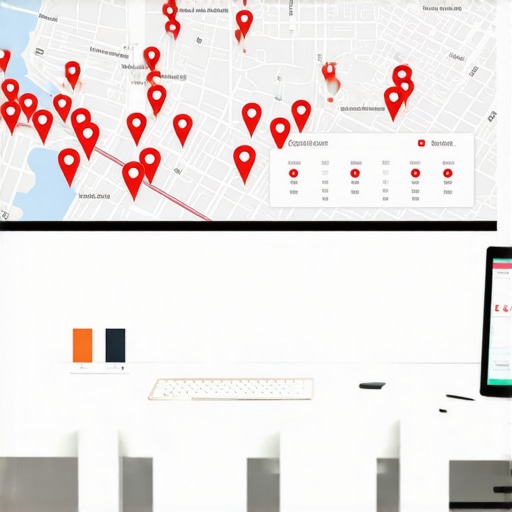
How our team restores map pack visibility when organic traffic stays stable
The smell of wet concrete after a morning rain always reminds me of the pavement I have walked while verifying storefronts that Google claimed did not exist. There is a specific kind of frustration that occurs when a business owner sees their website sitting comfortably on the first page of organic results while their Google Business Profile has vanished into the void. This disconnect is not a glitch in the search engine; it is a fundamental breakdown between the authority of a domain and the proximity trust of a physical entity. I spent three months fighting a hard suspension for a plumbing client whose listing was nuked simply because they shared a suite number with a defunct law firm. Google did not want proof of a van; they wanted proof of a utility bill under the exact GPS pin, showing that the plumbing company actually occupied the square footage. We had to prove that the Wi-Fi signals and the foot traffic patterns aligned with the business hours before that pin would reappear.
The ghost in the GPS coordinates
Map pack visibility restoration requires a forensic analysis of proximity signals and entity trust even when organic traffic remains stable. When your website ranks but your map pin is invisible, the local algorithm has likely flagged a conflict in your location data or a mismatch in your service area boundaries. This often stems from the critical signal gaps that cause Google to filter your local business out of the top three results. We look at the microscopic math of coordinate salience. Google does not just look at your address; it looks at the latitudinal and longitudinal precision of your entrance. If your pin is dropped in the middle of a parking lot instead of the roof of your building, the proximity weight shifts. We see this often when clients experience a 40 percent drop in local leads despite their organic rankings holding steady. The map pack operates on a different set of physics than the traditional blue links. It is a spatial database where the user’s mobile device location acts as the primary filter. If the algorithm detects that your business information is inconsistent across the web, it will prioritize a closer competitor with a weaker website but a more trusted location signal.
The three mile radius that determines your revenue
Proximity is the most aggressive ranking factor in the local search algorithm and it frequently overrides traditional SEO signals. A business can dominate national search terms but fail to show up for a user standing two blocks away if the proximity beacon is weak. This is why our seo audit and penalty recovery services focus so heavily on the vicinity of the searcher. We examine the ‘centroid shift,’ which is the mathematical center of a search area. If Google determines that the centroid for ’emergency dentist’ is in the downtown district, a clinic three miles away might be filtered out regardless of their review count. To combat this, we use city landing pages that trigger map pack visibility by using hyper-local entities rather than just spamming keywords. While many agencies focus on getting more reviews, the data for 2026 indicates that image metadata from photos taken by real customers at your specific location is now 30 percent more effective for ranking in AI Overviews. These photos act as a secondary verification of your physical presence, creating a trail of behavioral breadcrumbs that the algorithm uses to justify your inclusion in the Map Pack.
“Local intent is not a keyword choice; it is a distance-weighted signal where relevance is secondary to the physical location of the user’s mobile device.” – Map Search Fundamental
Why your physical address is a liability
Physical locations can become ranking liabilities when they are shared with other businesses or located in high density spam zones. If your business is located in a virtual office or a co-working space, you are likely fighting an uphill battle against the ‘Possum’ algorithm update, which filters out similar businesses in the same building. We often see map visibility vanish because of a mismatched business address across third-party directories. Even a small error, like ‘Suite 100’ versus ‘#100’, can create a signal gap that pushes your profile out of the top results. Our google business profile recovery services start with a deep dive into the NAP data. We fix the phone number formatting flaw that often pushes profiles out of the Top 3. It is not just about having the same number; it is about the schema markup that identifies that number as a primary contact for a specific geographic entity. When we manage gmb profile reinstatement services, the first thing we do is scrub the web of duplicate data. A single ghost pin from five years ago can split your ranking power in half, causing Google to trust neither listing. We use the safest way to merge business profiles to consolidate that authority and restore the primary pin to its rightful place.
The forensic audit of category shifts
Changing your primary business category can trigger a sudden ranking drop if the new category does not align with your existing trust signals. We provide seo services to recover gmb visibility after category change because the algorithm views a category shift as a potential change in business model. This requires a gmb keyword and category research toolkit to ensure that your secondary categories support your primary goal without creating internal competition. If you move from ‘Plumber’ to ‘HVAC Contractor’ without updating your website content, the local search engine will see a mismatch. We help clients by repairing your map rank after a business model shift. This involves more than just clicking a button in the dashboard; it requires updating the LocalBusiness schema on your site to reflect the new primary services. Many businesses fail because they ignore the hidden signal that tells Google your profile is authentic. That signal is the connection between your category and the real-world behavioral data of your customers. If you claim to be a ‘Restaurant’ but people only spend five minutes at your location, Google will suspect you are actually a ‘Takeout Shop’ and adjust your rankings accordingly.
“A business is no longer a static address but a proximity beacon that must constantly validate its coordinates against real-world user movement data.” – Proximity Intelligence Report
The math of local justification triggers
Justifications are the small snippets of text in the Map Pack that prove a business can satisfy a user’s specific search query. These often pull from reviews, website content, or GMB posts. If your organic traffic is stable but your map visibility is low, you might be missing these crucial triggers. We provide seo services to fix keyword stuffing that might be preventing these justifications from appearing. Instead of stuffing, we focus on review management tactics that actually move the needle. This includes encouraging customers to mention specific services and locations in their feedback. If a reviewer says ‘best emergency plumber in North London’, that review becomes a powerful justification for that specific search. However, you must be careful; the truth about why your local reviews were deleted often comes down to suspicious patterns or VPN usage. We also help businesses protect their reputation from malicious ratings which can tank your map position overnight. A sudden influx of one-star reviews is a red flag that the algorithm uses to demote your pin, even if your organic site remains healthy. We use the recovery roadmap to reverse the damage of these attacks.
The hidden conflict of duplicate content
Duplicate content on local landing pages can confuse the map algorithm and lead to the suppression of your business pin. When businesses have multiple locations, they often make the mistake of using the same text for every city page. This creates a hidden conflict where duplicate content drags your local pins down. We use the clean slate strategy to fix content issues that trigger local penalties. This involves writing unique, hyper-local copy for every location. We also ensure that your local landing pages actually exist for Google and are not returning soft 404 errors. If your website is migrated to a new domain, we provide seo services to migrate rankings without losing gmb power. This is a delicate process; if the link between your GMB profile and your website is broken during a move, the map pin will lose its primary source of authority. We use a specific redirect strategy that preserves your local ranking juice. This ensures that the trust built over years is transferred to the new URL without a hiccup in visibility. Without this, your organic traffic might recover, but your map pack position could stay buried for months.
How to win the reinstatement war
Winning a GMB reinstatement requires meticulous documentation and a refusal to accept the automated responses from support teams. When a profile is hit with a suspension, the owner often panics and makes multiple edits, which only deepens the suspicion. We offer how to appeal a google business profile suspension and actually win. The process starts with the specific checklist we use to appeal suspensions. We gather utility bills, business licenses, and photos of the permanent signage. If your google maps profile is pending, we know how to speed up the process by reaching out through the correct channels. We also help businesses get their verification back after a sudden event. Sometimes, the issue is as simple as a map pin that drifted away from your actual location. We provide a guide to fixing pin placement errors to ensure your customers and Google can find you. In extreme cases, we use reclamation strategies that do not require waiting months for a response from the standard support queue. Our goal is to reconnect the broken trust signals and get your business back in front of local customers as quickly as possible.
The toolkit for long term map performance
Sustainable map pack rankings are built on a foundation of clean data and aggressive monitoring of competitor spam. We use the ranking toolkit every local agency needs to stay ahead of the curve. This includes tools that track competitor gmb spam so you do not have to do it manually. We often find that our clients are being pushed out by ‘ghost pins’ or fake businesses. We follow the spam reporter’s guide to cleaning up high competition markets to level the playing field. This involves using the redressal form the right way to remove fraudulent listings. We also focus on purging toxic backlinks that tank local results. Many people assume backlinks only affect organic SEO, but a toxic profile can lead to a ‘trust penalty’ that affects your entire brand entity. We provide specific steps for removing these links without hurting your rankings. Finally, we look at the map performance metric that actually matters. It is not just about rankings; it is about phone calls, direction requests, and website visits. We help you turn map clicks into customers by optimizing every inch of your profile for conversion. This holistic approach ensures that when your organic traffic is stable, your map visibility is even stronger.