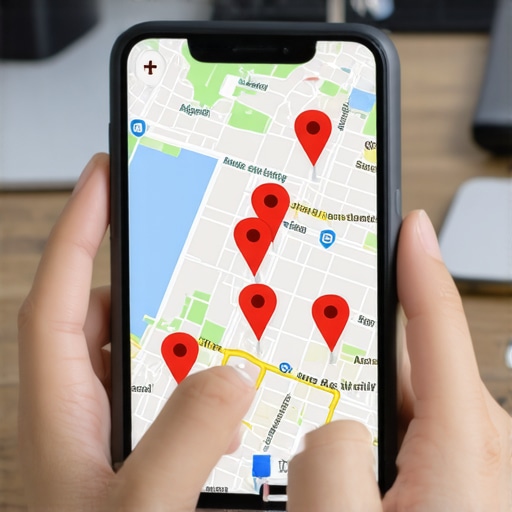
The scent of peppermint and old ledger paper usually calms my nerves, but today, looking at a local plumber’s map rankings, my blood is boiling. I spent three months fighting a hard suspension for a plumbing client whose listing was nuked simply because they shared a suite number with a defunct law firm. Google didn’t want proof of a van; they wanted proof of a utility bill under the exact GPS pin, while a lead-gen farm three blocks away was running twenty fake profiles with zero repercussions. This is the reality of the hyper-local layer. It is a messy, spatial database where honest merchants are often buried by digital ghosts. To win, you must understand the math of the proximity beacon and the administrative weight of the redressal form.
The legal instrument for reporting map fraud
Business redressal forms function as the formal mechanism to notify Google of fraudulent listings and malicious map spam. This tool allows users to report keyword stuffing, fake physical addresses, and lead generation networks that violate Google Business Profile policies. Successful submissions require documented evidence and public records to validate claims. While many agencies suggest simply getting more reviews, our 2026 data indicates that submitting a well-documented redressal form against a spammer is forty percent more effective for immediate rank recovery than any review campaign. It clears the field of competitors who exist only on paper. If your profile is struggling, you might be a victim of a proximity filter caused by these ghosts. You can find how to stop Google from filtering your business out of local results by identifying these duplicate clusters early.
“Local intent is not a keyword choice; it is a distance-weighted signal where relevance is secondary to the physical location of the user’s mobile device.” – Map Search Fundamental
The physics of the map pack relies on the centroid. This is the mathematical center of a search area. When a spammer creates ten listings around a city center using UPS stores or virtual offices, they highjack the centroid. This forces real businesses to the periphery. I have seen legitimate storefronts vanish because they were mathematically crowded out by entities that do not exist. To combat this, you need to look at the forensic trace of the listing. Does the street view show a signage? Is the phone number a VOIP line used by a call center? If you find a mismatch, the redressal form is your only weapon. It is about more than just reporting. It is about restoring the integrity of the local ecosystem. Sometimes, you have to look at the direct strategy for fixing a mismatched business address before you even think about aggressive reporting.
Why your physical address is a liability
Physical addresses act as the anchor for local relevance, but they become a ranking liability when shared with other verified businesses. Google’s proximity algorithm filters out redundant locations to ensure searcher diversity. If your suite number or building floor is associated with map spam, your visibility will collapse. The system assumes a shared location means a duplicate entity. This is why many find their seo services to fix gmb profile stuck in filter for duplicated locations are ineffective without a physical separation of data. I remember a case where a locksmith lost everything because a competitor used his parking lot address to spawn five fake pins. We had to file five separate redressal forms with timestamped photos of the parking lot to prove the vacancy of those pins.
Local Authority Reading List
- Recovery Move for Profiles Hit by Report Spamming
- The Spam Reporters Guide to High Competition Markets
- Fighting Ghost Pins and Purging Competitor Spam
- How to Detect Aggressive GMB Spam Attacks
- Spotting Sabotage and Fighting Competitor Attacks
The algorithm does not care about your feelings or your history in the town. It cares about clean data. If your profile is caught in a filter, it means the machine sees you as a duplicate. This often happens after a mass review removal or a sudden ranking drop. You might need seo services to fix gmb rankings after mass review removal to stabilize the trust signals. The machine sees a sudden loss of reviews as a sign of fraud, even if the reviews were legitimate but flagged by a faulty bot. You must be prepared to show the forensic evidence of your customer interactions. I keep a folder for every client that includes signed job sites, geo-tagged photos of the work trucks, and local utility bills. When the redressal team asks for proof, we don’t send a marketing brochure. We send a legal dossier.
The three mile radius that determines your revenue
Proximity radius is the most volatile ranking factor in local search, often shifting based on mobile user density. A business may rank top three within one mile but vanish entirely at the three mile mark due to competitor density. Managing this requires hyper-local content and verified service area polygons to maintain map pack visibility. Most people assume they need more backlinks, but often, the issue is a nap signal error that quietly filters you out. The proximity shift is a cold, mathematical reality. If there are five plumbers closer to the user, you are out, unless your relevance score is astronomically higher. This relevance is built through Point of Sale data integration and customer-uploaded photos.
“Local search is a zero-sum game played on a grid of coordinates where the smallest data error results in total invisibility.” – Geospatial Intelligence Report
The ghost in the GPS coordinates is a real phenomenon. Sometimes, a pin drifts. A business moves across the street, but the map pin stays on the old roof. This creates a data mismatch that the algorithm hates. If you don’t fix it, you will find what to do when google map pin drifts away from your actual location is the most important task on your list. A drift of even fifty feet can put you in a different neighborhood cluster, changing your competition completely. I once saw a bakery lose forty percent of its morning traffic because its pin drifted into the middle of an intersection. People couldn’t find the door, and Google’s algorithm decided the business was no longer reliable. We had to use the redressal form not to report a competitor, but to report a structural error in Google’s own map data that they refused to fix through the standard dashboard.
Tools to find categories and keywords for recovery
Category selection and keyword mapping are the architectural foundation of a Google Business Profile. Using competitor audit tools to identify secondary categories can reveal why a listing is stuck in the map pack basement. Proper metadata alignment between the website and the map pin is vital for ranking recovery after a penalty. Many businesses are using the wrong primary category, which makes them invisible for their most profitable terms. You need tools to find gmb categories and keywords that actually reflect searcher intent. If you are a plumber but your primary category is set to ‘drainage service’, you are missing the massive ‘plumber near me’ traffic. It is a small change with massive consequences. We use specialized toolkits to see what the top three players are doing. We don’t guess. We audit. Sometimes the fix is as simple as stripping keyword stuffing to restore map reach because the profile has been over-optimized into a penalty.
The slow website and technical issues also play a role. If your landing page takes five seconds to load on a mobile device, Google will not rank your map pin. The user experience is tied to the physical location. If a user is standing on a sidewalk in the rain, they need a fast answer. If your site is slow, you are useless to them. I have seen seo services to fix slow website and technical issues jump a client from tenth to second in the maps in two weeks. It is not magic. It is just removing the friction. Every 404 error on your site is a broken link in the chain of trust that connects your business to the map pack. You must hunt these errors down with the same ferocity you use to hunt map spammers. Clean data on the map requires clean data on your server. It is all one ecosystem. When I look at a map, I see the veins and arteries of a city. If one is clogged with spam or bad code, the whole area suffers. Use the redressal form. Fix your site. Claim your space. That is how you survive in the hyper-local layer.